
Research > Methods
Our research method
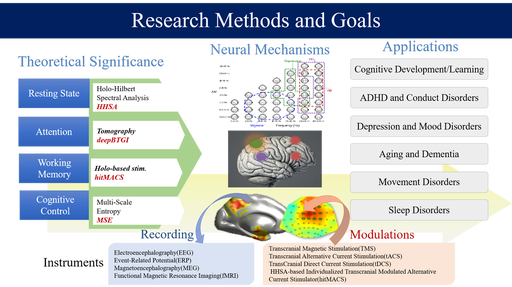
Attention not only serves as a base of memory, language and learning, it is also the gateway into the exploration of human consciousness and brain functions. Past studies have shown that the analysis of the eye movement is beneficial to the investigation of our brains' visual attention and cognition control. The core studies of visual cognition laboratory are done through the combination of pychophysical methods and modern experiment instruments, including transcranial magnetic stimulation (TMS), transcranial direct current stimulation (tDCS), eyetracker, functional magnetic resonance imaging (fMRI), magnetic resonance spectroscopy (MRS) and electroencephalography to investigate various topics relating to visual attention and impulsive control, mainly basing on the neural mechanisms of visual cognition as well with expansion to eye movement, attention, visual short-term memory, impulse control and other executive functions. VCL is the first laboratory in Taiwan that combines the use of transcranial magnetic stimulation (TMS) and Eyetracker in order to probe the research fields of human visual cognition and attentional control.