
People > Postdoctoral Fellows
Lora Yi-Chun Tsai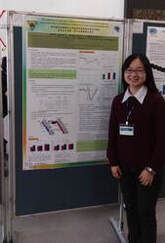
My research interest is to investigate the relationship between emotion, executive function, and personality traits. I am also interested in exploring the dynamic of brain oscillations after different protocols of TMS therapy in treatment-resistant depressed patients. The goal of this research line is to investigate the optimal biomarkers to predict treatment efficacy.
Office: Science Building 5, 6 F, Room 615
Phone: +886-3-422-7151 # 65219 Email: lora.yichun.tsai@gmail.com |
Dr Hui-Yan Chiau
My main research interests focus on cognitive neuroscience, particularly decision making. My current aim is to investigate the neural mechanisms and mathematical models by which human learn how to adjust behavior flexibly in response to urgent and rare events. For this I will employ multimodal brain imaging (behavior, simultaneous TMS-EEG, electromyography and force measures) as well as mathematical modelling. During my PhD, I studied the impact of implicit and subliminal contextual information on saccadic control and the neural mechanism.
Office: Science Building 5, 6 F, Room 615-1
Phone: +886-3-422-7151 # 65219 Email: huiyanchiau@gmail.com |
Yu-Lun Chen |
Che-Yi Hsu
|
|
My research interest is to investigate the relationship between exercise and brain cognitive function, and to explore the power precisely, motor preparation and working memory on different types of athletes. I also want to explore the interaction between sport and brain. The goal of this research line is to prove the benefits of exercise to the brain.
|

|
I am focused on investigating the cognitive functions associated with neural mechanisms such as visual attention and inhibitory control using EEG and combine with noninvasive brain stimulation such as tDCS/ tACS for human studies.
|
|
Email: mickey12354@gmail.com
|
Email: cheyihsu.icn@gmail.com
|
Pei-Ling Wong
|
My research focuses on the effects of neuromodulation and exercise training on motor and cognitive functions in patients with neurodegenerative disorders. In particular, I examine the neural control mechanisms underlying dual-task walking in individuals with Parkinson’s disease and stroke. By integrating transcranial direct current stimulation (tDCS), transcranial magnetic stimulation (TMS), functional near-infrared spectroscopy (fNIRS), and motor assessments, I aim to understand how different stimulation parameters and training strategies enhance brain plasticity and motor performance. In addition, I investigate how complex motor and cognitive training interventions modulate gait ability and brain activity, with the ultimate goal of developing integrative neurorehabilitation strategies to improve patients’ daily functioning and brain health. |